
The domestic rabbit, cuniculus domesticus, is a recent invention. Rabbits have been hunted and husbanded for food for thousands of years, but as house pets they have mostly only been kept since the 1800s. This recency shows in their behavior. Dogs are human-oriented as a result of centuries of breeding. Cats are perhaps more fickle, but they certainly recognize humans as caregivers and companions. Rabbits, in my opinion, are entirely baffled by humanity, as we are by them. Rabbits exist for themselves, not for the benefit of anyone or anything else, and learning to love them is about embracing this fact. It does not hurt that they are a strong contender for the cutest creatures on earth.
Baby Peanut, with her impossibly long ears and impossibly soft fur.

The preceding should not be taken to mean that rabbits do not like people. If they are not used to people, they are understandably scared of us because they are prey animals with strong instincts and naturally fear almost everything. At times, our rabbits seem afraid of the power of their own naps. But rabbits are social animals and they enjoy companionship. They find humans interesting; once accustomed to us they like to watch what we are doing, to nuzzle us, and to see if we serve as a good source of treats. However, they lack any sort of instinct to please or defer to us like a dog, or to even negotiate in the manner of a cat.
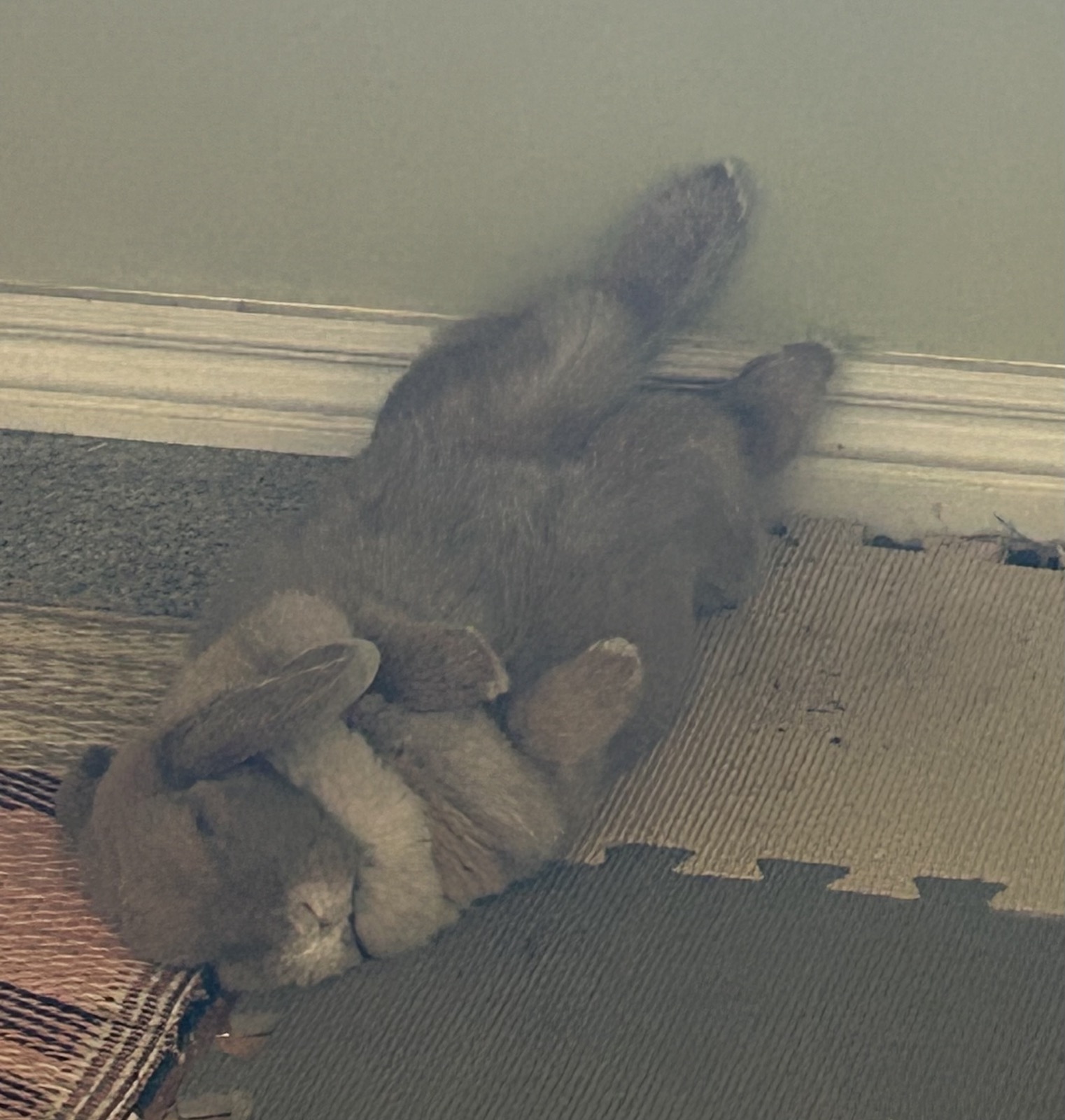
A nap so big that waking up from it was an alarming experience.
In place of human-orientedness, rabbits have the richest inner lives of any animal I have observed. This becomes obvious upon spending any sustained amount of time with them. Between themselves rabbits observe complex social rituals with expectations of etiquette and rituals of forgiveness when etiquette is disturbed. They form plans, sometimes complex ones. Ours will work together to have one rabbit distract my wife in a particular way when she enters the room while they live so that the other can escape to gnaw on the tubing behind the washing machine. Both are pleased by this event, every time. Incidentally, another quirk of rabbits is that they seek to gnaw on everything. There are many theories as to why. Some people say they see nearly everything as a tree root that would block part of a warren (they do have poor eyesight). Others thing it is related to the endless growing of their teeth, which must be filed down through regular eating.
Rabbits are the antidote to the ills of modernity. In a time of near-constant optimization and efficiency, it is delightful to encounter a creature that is by its nature resistant to either of these concepts. Rabbits take as much time as they need with their projects because to a rabbit it is best to do things right, and what it means to do things right involves purely the satisfaction derived from the task. Rabbits do not particularly care if our plans for them are "good ideas" or "healthy". They care only for their own entertainment and curiosity, and their curiosity is directed to no end in particular. They adore exploration and experimentation for the sake of finding out what will happen. They are childlike wonder and petulance bottled together and shaped into an animal so fluffy and soft it does not seem it could possibly be real.
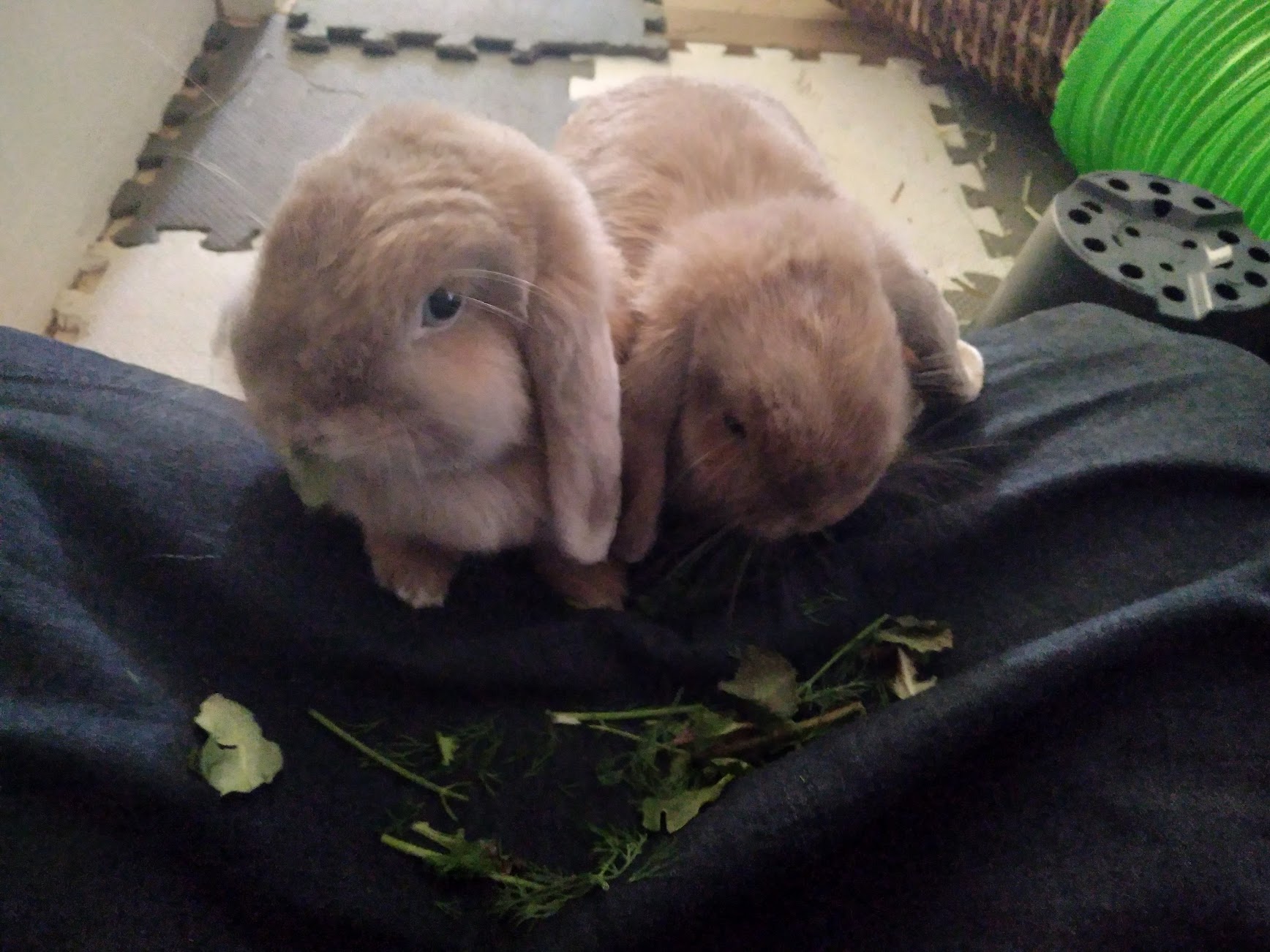
The sisters eating greens together (important for their vitamin intake!)
I will not lecture you about their care at too much length, but many rabbits do not receive proper care and if you decide to get rabbits there are things to know. For one, know everything I have said here -- your rabbit is not and will never be a cat or a dog. Nor is it a child's pet, nor should it be solitary. It needs another rabbit, and a place with plenty of space for both of them to move. They are hoppy, curious creatures and it is cruel to deny them that right. They require a certain amount of work every day to maintain their litterboxes and ensure they have food and water. They are tidy creatures left to their own devices, but if housed indoors they are denied of all the ways they would naturally see to these needs, so you must do it instead. They will also require a certain amount of enrichment, meaning toys, hides, and play-shelters that they can move, construct, and destroy in order to give their natural impulses an outlet that is tolerable to you. (Those impulses *will* find an outlet -- your only choice is how to try and direct them).